---
title: The Gender Data Gap in the Year of the Woman Farmer
description: 2026 has been declared the UN International Year of the Woman Farmer. In this blog, we critically reflect on the data gender gap for women smallholders.
image: https://datajourney.akvo.org/hubfs/Gender%20Data%20Gap%202.png
---
[](https://akvo.org/)
- [Our approach and services](https://akvo.org/our-approach-and-services/)
- Our sectors
- [Water](https://akvo.org/water-data/)
- [Agriculture](https://akvo.org/agriculture-data/)
- [Climate](https://akvo.org/climate-data/)
- [Our work](https://akvo.org/our-work/)
- [Our blog](https://datajourney.akvo.org/blog)
- About us
- [About us](https://akvo.org/about-us/)
- [Meet our team](https://akvo.org/meet-our-team/)
- [Join our team](https://akvo.org/join-our-team/)
- [Contact us](https://akvo.org/contact-us/)
- [Get in touch](https://akvo.org/contact-us/request-a-consultation/?hsCtaTracking=337f7397-9e95-4663-9b65-73a179fb716f%7C5ae490c2-c6cb-4655-b753-05efd763ba65)
Search
x
- [Our approach and services](https://akvo.org/our-approach-and-services/)
- Our sectors
- [Water](https://akvo.org/water-data/)
- [Agriculture](https://akvo.org/agriculture-data/)
- [Climate](https://akvo.org/climate-data/)
- [Our work](https://akvo.org/our-work/)
- [Our blog](https://datajourney.akvo.org/blog)
- About us
- [About us](https://akvo.org/about-us/)
- [Meet our team](https://akvo.org/meet-our-team/)
- [Join our team](https://akvo.org/join-our-team/)
- [Contact us](https://akvo.org/contact-us/)
-
-
-
-
-
-
# The Gender Data Gap in the Year of the Woman Farmer
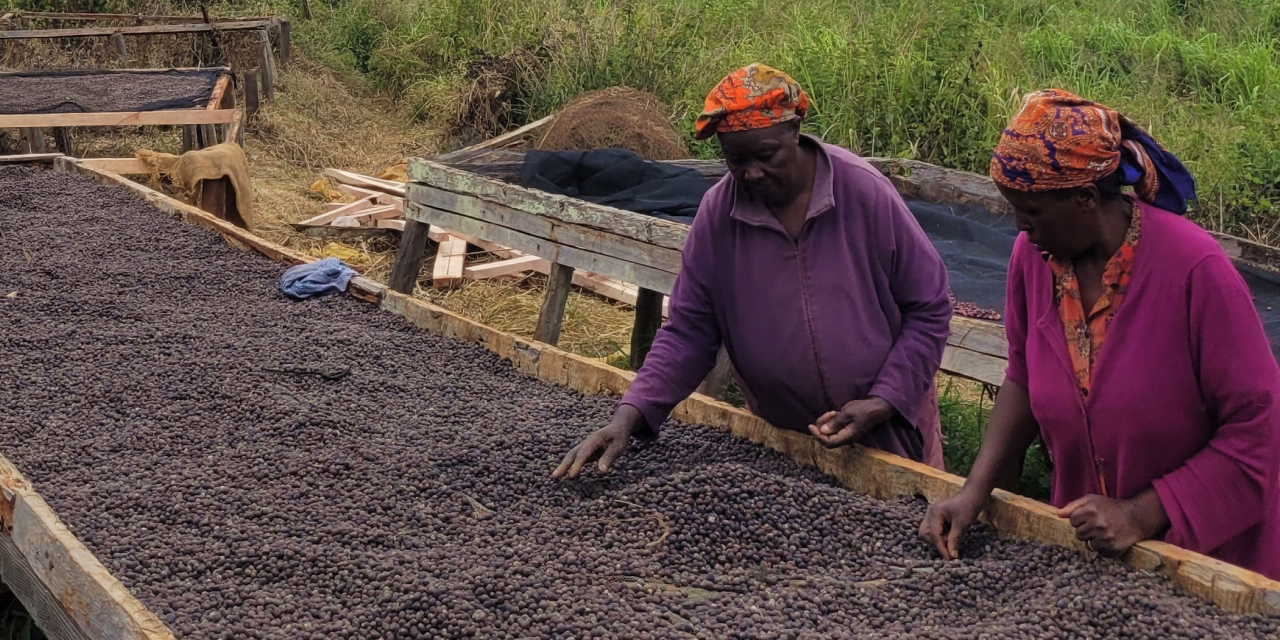
Women cocoa farmers during an Akvo visit in Embu, Kenya
- Written by: [Sandra Fudorová](http://www.linkedin.com/in/sandra-fudorov%C3%A1-0447b5235),
29 April 2026
- Share:
2026 has been declared the UN International Year of the Woman Farmer[(FAO](https://www.fao.org/woman-farmer-2026/about/en)), making it a global moment to recognise the contributions of women in agrifood systems and to push for real action on the structural barriers they face. It feels like a good time to critically reflect on something we have been discussing at Akvo for a while: the gap between our good intentions around gender and what our data practice actually delivers.
I recently came across a [briefing paper from LICOP and the Anker Research Institute](https://www.living-income.com/fileadmin/user_upload/2_ARI_LICOP_Gender_and_LI_Briefing_Paper_2025.pdf) on gender equality and living incomes in smallholder farming communities. It's a great resource, especially for projects trying to deliver through a gender lens. Reading it also made me want to put my own thoughts down, because the gap I mentioned is significant, and in the year we are supposed to be centering the woman farmer, I think we need to name it clearly.
So let me walk you through what I see at each stage of the data lifecycle: where we are falling short when it comes to female smallholder farmers, and what better practice actually looks like.
### Stage one: Understanding data needs
Every data story should start with alignment on what you actually need to know. What are the key drivers of gender disparity in agriculture?
From my experience, the usual suspects are:
- Less fertile land
- Land tenure issues that primarily affect women
- Limited bargaining power and under-representation of women in farmer organisations
- Lower access to shared facilities and skilled labour
- Lower access to high-quality inputs
- Smaller farm sizes
- And social norms, which not only contribute heavily to those above, but also dictate which roles are acceptable for women
There are more, but these come up again and again in the literature.
Now take any of our Living Income surveys. With the exception of land size, we often don’t collect detailed data on any of the above, whether it’s due to the complexity of these topics, limited budgets and tight deadlines, or simply a perceived “lack” of need. This means that everything that follows in the data lifecycle is not informed by data on the key gender differences that actually matter. Good service delivery through a gender lens would need to take these issues into account, otherwise, we are designing it half-blind. What is the impact? Services that often unintentionally exclude women by their very nature and do not deliver fully. And with the bottom line in mind, this is also a massive part of the market missed and many potential paying customers are left without access.
This is already where many projects fall short, before a single interview has been conducted. In the current agricultural landscape, where government policies often lack explicit strategies to address gender gaps, clear requirements for collecting sex-disaggregated data and dedicated budget lines for gender-responsive action, business actors become less likely to prioritise gender as a key issue. The LICOP-ARI briefing paper makes a related point: most companies are not gathering information on how household members' time is divided across paid and unpaid work, or who controls income decisions. Without this, it is very hard to design interventions that reach the right people.
**Our key recommendations:**
- Map the key gender-specific drivers of income gaps in your context before designing your survey instrument.
- Include indicators on land tenure, decision-making power, and access to inputs, not just land size and yields.
- Explore how time is divided across paid and unpaid work within households, and who controls income decisions . These are not optional extras, they are the core variables that explain the gap.
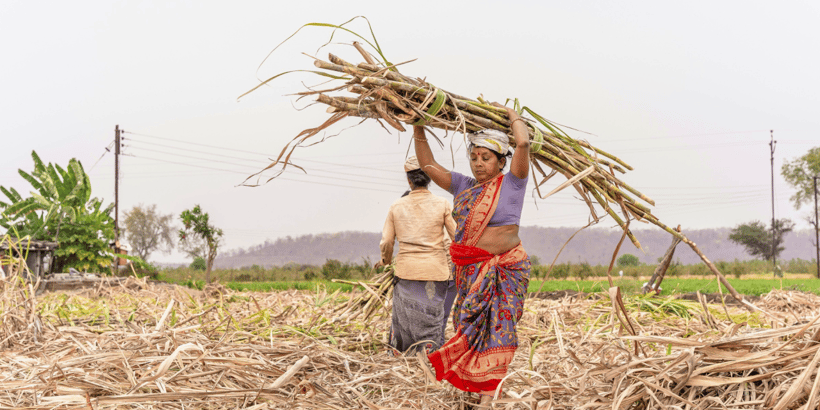
*Women sugarcane farmers in Nagpur, Maharashtra, India*
### Stage two: Data collection
This is where the representativeness of your data is made or broken, and I truly cannot stress this enough.
Many of us rely on farmer lists obtained from companies or governments to draw our samples. The representation of women on these lists is a massive issue. Let me give you a concrete example. In our recent data collection, the goal was to hit a 33% female threshold in the sample. Spoiler: we did not. I received a relatively large farmer list and wrote a piece of code with simple instructions: mix up the list, draw a random sample, make sure there are 33% women and 10% youth, accept if conditions are met, draw again if not. My code ran 20,000 times before we got a valid sample. Twenty thousand. And it was the proportion of women that was hard to hit, not the youth. At that point, can it even be considered a random sample, when there are so few options on the list that meet your conditions?
But that’s not all. We know these lists are fragmented, incomplete and outdated . So who is not on them, and why? Sometimes it is cultural norms that dictate the husband should be listed despite the wife being the main farmer. But often, the women left out are often exactly the most vulnerable ones: those that lack formal land ownership, those without official ties to buyers, and those in the most remote locations. The real gender-based differences are likely underestimated in our data, and the most vulnerable women remain unseen.
And then there is the question I keep coming back to: who is the female farmer to interview? We operate under the assumption that the farmer on the list is the main farmer, but we do not really know whether these are the people who truly affect farming practices, make market decisions, and ultimately drive household income. The LICOP-ARI briefing paper names this point clearly: the norm of defining farmers as those who own or manage registered farms excludes huge numbers of women who perform critical labour, such as tending to young plants or post-harvest processing, but are invisible to data collection because they simply are not on the list. What this kind of data lifecycle cannot deliver is a representative picture of all the women we would want to capture.
Let's also not forget the environment we operate in. It would be foolish to ignore the link between education and the ability to keep records, recall figures, or even answer many of our number-based (or worse, percentage-based) questions. Women in the countries we operate in face strong inequality in access and quality of education, which I am sure I do not need to explain. The implications for data quality? Honestly unknown, but one can certainly imagine.
And lastly, consider the very nature of the income-related questions we are asking. As I mentioned, many female farmers are not the ones with decision-making power over the household's finances. This means that women may struggle to provide detailed information, as they do not have insights into all of the household's income streams. The briefing paper adds that women may even deliberately under-report their own income because keeping it separate is one of the few ways they retain control over it.
**Our key recommendations**
- Do not rely on company or government farmer lists as your only sampling frame; actively investigate who is missing and why. Collaborate with other actors to keep the lists up to date and accurate.
- Use weighted or purposive sampling strategies - not just as a quota exercise but as a genuine methodological commitment.
- Broaden your definition of "farmer" in data collection to include unpaid family labour and those managing farms in the absence of a spouse.
- Where possible, interview multiple household members separately, or consider a household approach. While this can inflate costs, it ensures that your data better captures the full picture.
- Use gender-matched enumerators where possible. At Akvo, we always strive to have a gender-balanced enumerator team.
- Be transparent in your reporting about the data quality limitations that come with low-literacy contexts and highlight which findings have higher risk of a gender bias.
- Invest in qualitative research alongside surveys to understand the mechanisms behind the gaps you are finding. If you opt for focus group discussions, try to separate participants based on gender.
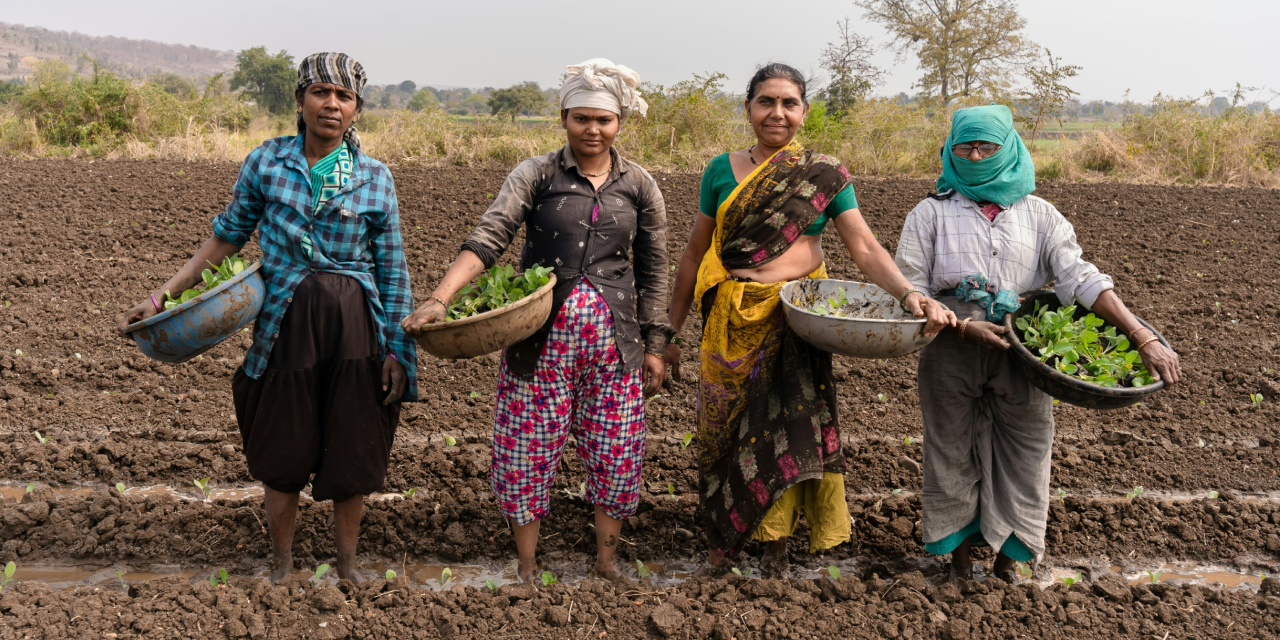
*Women farmers transplanting lettuce seedlings in India*
### Stage three: Data analysis
So what do I end up analysing? A dataset that is, if I'm being honest, not telling the entire story, often questionably sampled at best, and affected by structural factors that are near impossible to isolate. I analyse the dataset, I draw a conclusion, I do my best. And quite frankly, I will never know whether I was completely right.
But here is what I see, regardless of crop, regardless of context or country. Lower yields for women, with statistical significance. We are often more than 99.9% sure there is a difference between men and women, with women producing less. The only other variable that is this conclusive is land size. Less land, also beyond statistical doubt. And the only thing that can come out of those two findings: lower incomes, higher living income gaps, and a significant number of female farmers far below the Living Income Benchmark, often even below the poverty line. This perpetuates a cycle of low investment, low yields, and bad livelihoods.
The gap shown by the analysis is real. But without the explanatory variables (land tenure, bargaining power, access to quality inputs) I can only hypothesise why the gap exists or what would close it. I can confirm the problem. I cannot adequately diagnose it. And that matters enormously for what comes next.
**Our key recommendations:**
- Always disaggregate by gender: explore groups within groups, not all women are the same.
- Report clearly on what the data cannot explain. Name the missing variables explicitly, do not quietly omit them.
- Collaborate across projects to build datasets that include explanatory variables, not just outcome indicators.
### Stage four: Data-driven decision making
Your project is now making decisions, allocating resources, and targeting help on the basis of this incomplete, somewhat inaccurate picture. I think we can do better and we should be doing better.
Focusing on gender is always, always worthwhile. The results consistently show inequality that prompts well-meaning, targeted action. But well-meaning is not the same as well-designed. The LICOP-ARI briefing paper cites a meta-analysis of 24 IFAD-funded projects that found programmes which strengthen women's decision-making power over income and resources are significantly more effective - producing 5% greater gains in income, 9% in dietary diversity, and 19% in resilience - compared to programmes that do not. Gender integration is not a nice-to-have. It is an efficiency argument.
Yet only a third of companies surveyed for that paper were doing even basic gender disaggregation when measuring living income gaps. Most are not considering gender issues when designing interventions at all. And when interventions are implemented in a gender-blind way, the net result is likely to be greater inequality, because men will benefit disproportionately from any increase in productivity or price premiums. We can confirm a gap, allocate resources, and still make things worse if we are not careful.
**Our key recommendations:**
- Design interventions based on a gender analysis, moving beyond just gender-disaggregated outcome data. Explore what specific barriers women and men face, that may lead to the issues you are trying to solve and what causes them, rather than just the impacts they create.
- Engage both women and men in intervention design. Changes in women's economic roles need buy-in within households to be sustainable.
- Monitor and evaluate the gender impacts of your interventions, not just headline income or yield outcomes. Did your interventions unintentionally create an additional burden on women, or disproportionately benefited men? You might want to rethink your design.
- Treat gender integration as a supply chain resilience and business issue, the evidence on returns is there. Explain to your stakeholders and sponsors that women are marketable customers and reliable supplier.
### What actually needs to change
The key transformation that needs to occur is structural, across every step of the data lifecycle, and it cannot be driven by a donor requirement or a checkbox. It needs to come from a genuine understanding of a few things that the evidence is very clear on: that women in LMICs are often better at handling household finances and leading systemic economic change through investment in nutrition and children’s education ([Frontiers](https://www.frontiersin.org/journals/sustainable-food-systems/articles/10.3389/fsufs.2019.00056/full#h14)); that under equal conditions, women are at least as good as men at farming and reducing structural barriers that affect them could lift 100 million people out of hunger through increased productivity ([World Food Programme](https://www.wfp.org/news/empowering-women-and-girls-crucial-ensure-sustainable-food-security-aftermath-covid-19-say-un)); and that improving the standing of women is incredibly efficient in lifting societies as a whole ([World Bank](https://openknowledge.worldbank.org/server/api/core/bitstreams/2dc34f8e-4485-5fe8-bb58-cb98b7f17e54/content)).
As Anna Laven, independent researcher and KIT Associate, puts it in the LICOP-ARI briefing paper: *"Gender inequality is part of the living income problem. And gender equality is part of the solution."*
We have the data lifecycle. We have the evidence. What we need is the will to do this properly, at every step and not only because a donor asked us to.
*The LICOP-ARI briefing paper referenced throughout this post is: Smith, S. & Stoikova, A. (2025). The Importance of Gender Equality for Living Incomes in Smallholder Farming Communities. Joint Briefing Paper, Living Income Community of Practice and Anker Research Institute. Available at*[*living-income.com*](https://www.living-income.com/fileadmin/user_upload/2_ARI_LICOP_Gender_and_LI_Briefing_Paper_2025.pdf)*.*
[](https://cta-redirect.hubspot.com/cta/redirect/1891949/c121e58b-7132-4e02-8aa7-db4122167850)
### Sandra Fudorová is a data expert at Akvo. She is based in Rotterdam.
[LinkedIn](http://www.linkedin.com/in/sandra-fudorov%C3%A1-0447b5235)
Posted in: [Agriculture](https://datajourney.akvo.org/blog/tag/agriculture), [Data services](https://datajourney.akvo.org/blog/tag/data-services), [Tech services](https://datajourney.akvo.org/blog/tag/tech-services)
### You might also like...
#### [The missing layer: Why local knowledge is essential to climate resilience](https://datajourney.akvo.org/blog/the-missing-layer-why-local-knowledge-is-essential-to-climate-resilience)
- July 13th, 2026
#### [How winning a global innovation challenge validated two decades of open thinking](https://datajourney.akvo.org/blog/how-winning-a-global-innovation-challenge-validated-two-decades-of-open-thinking)
- June 16th, 2026
#### [Building open tech for public good](https://datajourney.akvo.org/blog/building-open-tech-for-public-good)
- November 4th, 2025
#### [Harnessing AI to address complex societal problems - use cases, risks, and future trajectories](https://datajourney.akvo.org/blog/harnessing-ai-to-address-complex-societal-problems)
- May 23rd, 2025
##### About
- [Meet our team](https://akvo.org/meet-our-team/)
- [Our vision and mission](https://akvo.org/our-vision-and-mission/)
- [Join our team](https://akvo.org/join-our-team/)
- [Our legal entities](https://akvo.org/our-legal-entities/)
- [Media and press](https://akvo.org/media-and-press/)
- [Strategic partnerships and consortia](https://akvo.org/strategic-partnerships-and-consortia/)
##### Our regional hubs
- [Americas](https://akvo.org/americas/)
- [West Africa](https://akvo.org/west-africa/)
- [East Africa](https://akvo.org/east-africa/)
- [Asia Pacific](https://akvo.org/asia-pacific/)
##### Our services
- [Our approach and services](https://akvo.org/our-approach-and-services/)
- [Knowledge library](https://akvo.org/knowledge-library/)
##### Tech solutions
- [Help and support](https://akvo.org/help-and-support/)
- [Data platform updates](https://akvo.org/data-platform-updates/)
- [Data platform status](https://akvo.statuspage.io/)
- [Vulnerability Disclosure Policy](https://akvo.org/vdp/)
##### General
- [Terms of service](https://akvo.org/terms-of-service/)
- [Policies and legal documents](https://akvo.org/policies/)
- [FAQ](https://akvo.org/faq/)
- [Contact us](https://akvo.org/contact-us/)
- [Our blog](https://datajourney.akvo.org/blog)
##### Our expertise
- [Agriculture](https://akvo.org/agriculture/)
- [Water](https://akvo.org/water/)
- [Climate](https://akvo.org/climate/)
-
-
-
-
-
-
We apply the principles of open source software, open content and open data to all of our work.
Find out [why and how](https://akvo.org/blog/open-data-content-and-software-at-akvo/).