---
title: "The missing layer: Why local knowledge is essential to climate resilience"
description: Local knowledge is critical for climate resilience. Learn how combining indigenous knowledge with climate data improves adaptation and early warning systems.
image: https://datajourney.akvo.org/hubfs/Eswatini%20blog%20cover.png
---
[](https://akvo.org/)
- [Our approach and services](https://akvo.org/our-approach-and-services/)
- Our sectors
- [Water](https://akvo.org/water-data/)
- [Agriculture](https://akvo.org/agriculture-data/)
- [Climate](https://akvo.org/climate-data/)
- [Our work](https://akvo.org/our-work/)
- [Our blog](https://datajourney.akvo.org/blog)
- About us
- [About us](https://akvo.org/about-us/)
- [Meet our team](https://akvo.org/meet-our-team/)
- [Join our team](https://akvo.org/join-our-team/)
- [Contact us](https://akvo.org/contact-us/)
- [Get in touch](https://akvo.org/contact-us/request-a-consultation/?hsCtaTracking=337f7397-9e95-4663-9b65-73a179fb716f%7C5ae490c2-c6cb-4655-b753-05efd763ba65)
Search
x
- [Our approach and services](https://akvo.org/our-approach-and-services/)
- Our sectors
- [Water](https://akvo.org/water-data/)
- [Agriculture](https://akvo.org/agriculture-data/)
- [Climate](https://akvo.org/climate-data/)
- [Our work](https://akvo.org/our-work/)
- [Our blog](https://datajourney.akvo.org/blog)
- About us
- [About us](https://akvo.org/about-us/)
- [Meet our team](https://akvo.org/meet-our-team/)
- [Join our team](https://akvo.org/join-our-team/)
- [Contact us](https://akvo.org/contact-us/)
-
-
-
-
-
-
# The missing layer: Why local knowledge is essential to climate resilience
- Written by: [Lotte Savelberg](https://www.linkedin.com/in/lottesavelberg/), [Maurits Kruisheer](https://www.linkedin.com/in/maurits-kruisheer-44778a138/),
13 July 2026
- Share:
The past eleven years have been the eleven [warmest on record](https://wmo.int/news/media-centre/earths-climate-swings-increasingly-out-of-balance) according to the World Meteorological Organisation (WMO), with no signs of slowing down. Floods, droughts, heatwaves, and shifting rainfall patterns are already threatening lives and livelihoods across the globe. Critically, these effects never arrive in isolation. They collide with poverty, fragile governance, land degradation, and political instability, producing risks that are deeply context-specific.
The communities bearing the greatest burden of this crisis are also, too often, the least represented in decision-making bodies and in the development of measures intended to help them. The knowledge they hold - place-specific, intergenerational, tested against real conditions - is largely absent from the systems designed to support adaptation. That absence is a central failure in effective climate response.
Strengthening climate resilience begins with a deceptively simple question: how is the climate affecting people's livelihoods, how do they respond to climate variability, and what decisions can they realistically make - now and in the years ahead - to reduce those impacts? The answer, it turns out, is more complicated than it sounds.
### Why better data hasn't meant better outcomes
Over the past decade, forecasting capabilities have improved significantly through advances in satellite monitoring, global climate models, and artificial intelligence. Global models can now generate sufficiently reliable climate information, even in regions with relatively sparse observational data. This is significant progress, yet it has not automatically translated into improved resilience for local communities.
In light of these developments, data scarcity is no longer the primary obstacle. The focus should now lay on adapting our institutional workflows to translate available data into meaningful action. Even where weather and climate data exist, they remain largely disconnected from on-the-ground realities of local decision-making. Farmers, pastoralists, indigenous communities, and subnational governments are among those most affected: they are routinely excluded not only from accessing relevant place-based data, but from contributing to it. As a result, existing information rarely translates into the knowledge or action needed to strengthen community resilience. Communities are left navigating extreme events and long-term climate shifts without adequate support, increasing the risk that they will lack the capacity or resources needed to adapt to the most severe climate shocks - or worse, that livelihoods will be maladapted based on insufficient data.
### Local knowledge at the heart of decision-making
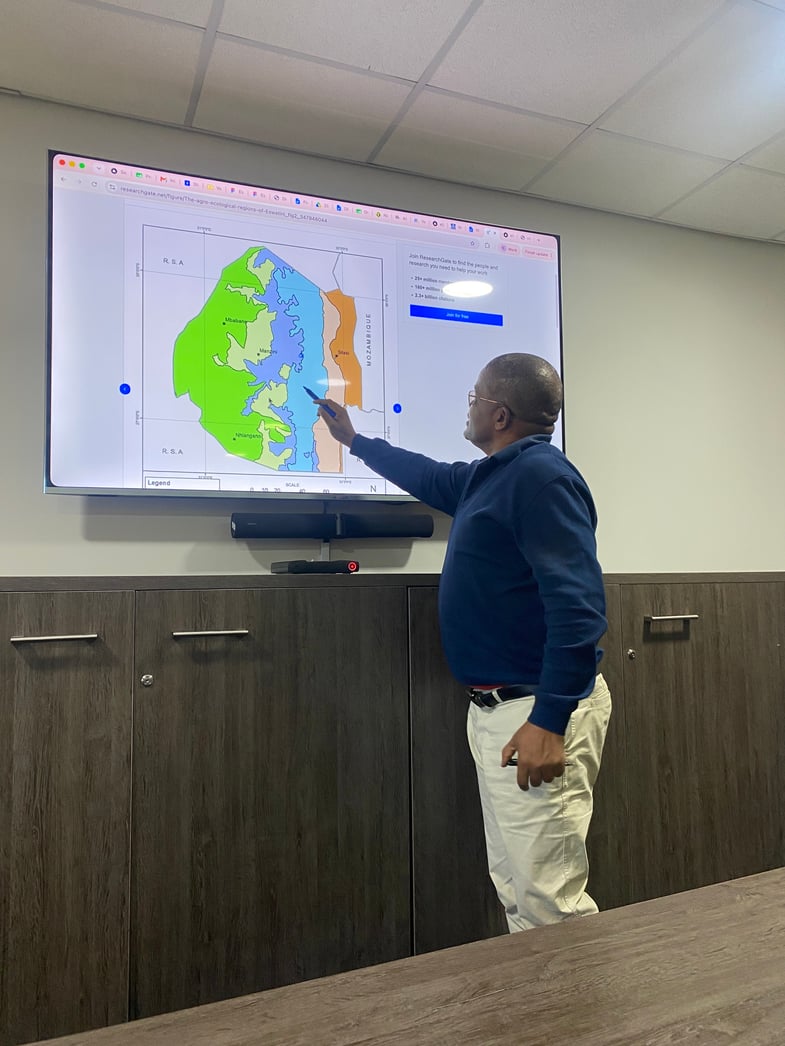
Much of what communities know about their local climate - passed down through generations, embedded in oral histories and lived experience - rarely finds its way into formal decision-making or governance responses. National decision makers, however well intentioned, often simply lack access to this knowledge.
[Research conducted by the University of Eswatini](https://preparecenter.org/wp-content/uploads/2025/04/Full-Paper-Last-Mile-Utilization-and-Actionability-of-EW-in-Eswatini.pdf) as part of the CDI-E programme - a national drought monitoring initiative supported by the World Bank and implemented by the National Disaster Risk Management Agency - illustrates this directly. Researchers surveyed over 1,000 households across all four regions of the country. It found that 67% of communities had working knowledge of indigenous climate indicators: the fruiting patterns of marula and water berry trees signalling good rains; butterfly swarms and locust infestations foreshadowing drought; the shape of the crescent moon indicating whether the season ahead would be wet or dry. Farmers described routinely cross-checking official meteorological forecasts against these indicators before making planting decisions, and in some cases, choosing to trust their own observations over official warnings. As one farmer in Nkhaba put it: "We don't trust you completely with your modern prediction system which is not always accurate... Our traditional system told us that we will get rains, hence here we planted."
### The solution: Building inclusive knowledge infrastructures
Transforming climate knowledge into effective action requires systems that connect scientific expertise with local knowledge and embed both in governance and decision-making. What does this look like in practice?
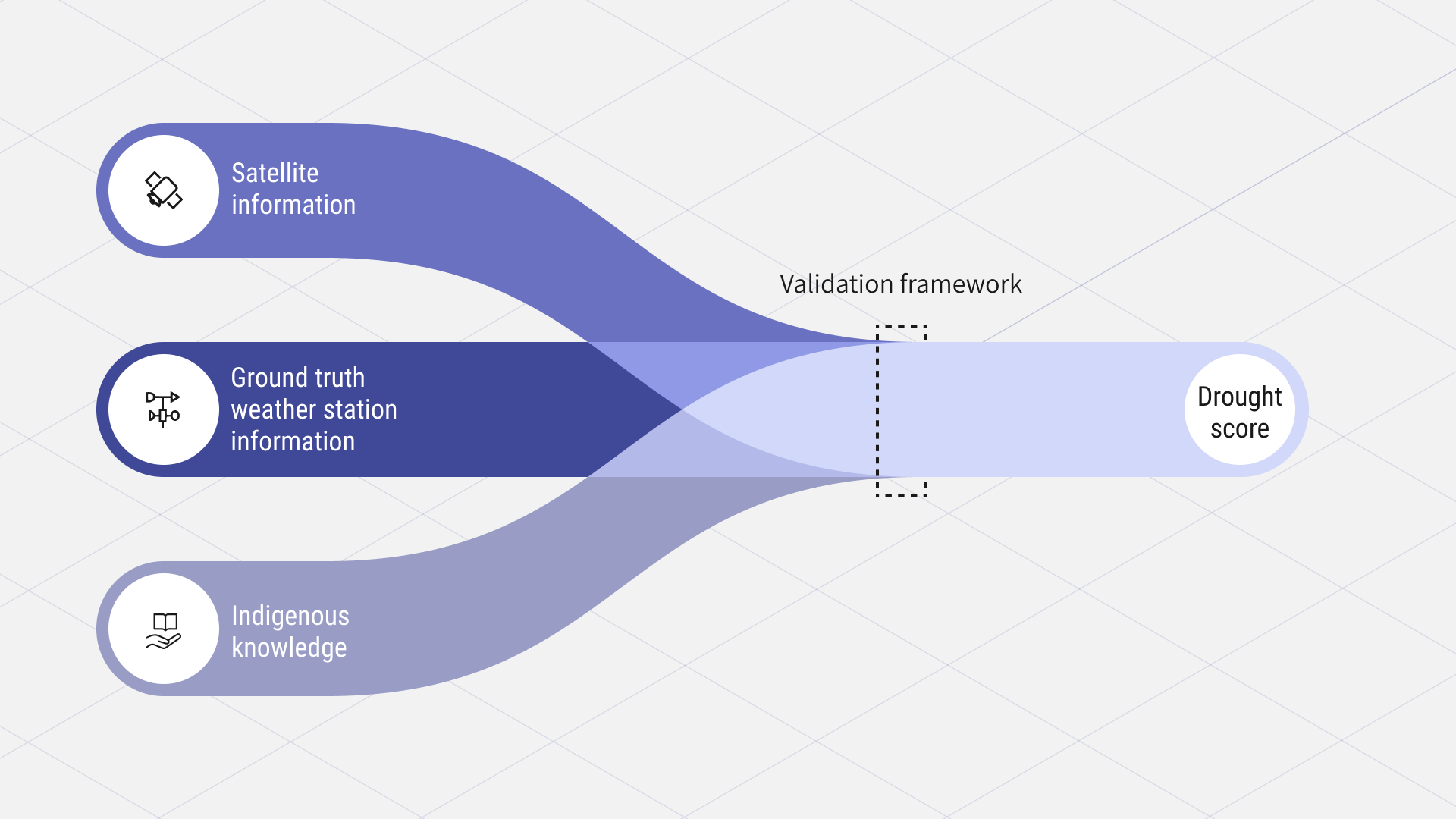
The CDI-E programme in Eswatini offers one example. Developed by the National Disaster Risk Management Agency with support from the World Bank, their Drought Intelligence Hub combines satellite imagery, meteorological station data, and indigenous knowledge into an Early Warning System for drought monitoring, built by Akvo. Rather than treating these as separate data streams, the programme designed them to work together: satellite-derived precipitation and vegetation data provide broad spatial coverage, while a network of weather stations installed at 59 schools across the country collects real-time ground observations to validate and refine what the satellites detect. Alongside this, a parallel indigenous knowledge network systematically documents and integrates traditional climate indicators into the monitoring framework. This network was built through household surveys of over 1,000 families and focused group discussions with elder knowledge holders across all four regions.
Inclusive knowledge infrastructure is not a single platform or dataset. It is a process: communities articulate what they know and what they need, scientists refine the relevance of their models accordingly, and institutions coordinate responses shaped by both. Such systems must remain dynamic, since climate risks evolve, governance contexts shift, and the knowledge that matters changes with them. Recent advances in satellite monitoring, global forecasting, and artificial intelligence create real opportunities here, but only when these tools are embedded in systems that connect them to the communities whose decisions they are meant to inform.
### From climate data to climate agency
At its core, climate resilience depends not only on the availability of information but on the ability of people and institutions to act on it. This ability can be understood as climate agency: the capacity to anticipate risks, make informed decisions, and influence the responses that affect one's life and livelihood. The farmer in Nkhaba who cross-checks a meteorological forecast against the fruiting of marula trees and decides to plant is exercising climate agency. The question is whether the systems around her support that agency or ignore it.
Strengthening climate agency means moving beyond purely technical approaches. It requires networks that connect communities, scientific institutions, and governments across scales and sectors - linking them in collaborative processes through which climate information is produced, interpreted, and turned into early action.
Better models, more satellite data, and improved forecasting all matter - but they will only go so far. Without systems that connect scientific knowledge with local knowledge, and that give communities a real voice in the responses that affect their lives, the gap between data and action will remain.
Those communities are not simply vulnerable populations waiting for solutions. They are knowledge holders, early observers, and essential partners. Treating them as such is the only way to build climate systems that actually work.

### Lotte Savelberg is a Data Services Expert, based in Amsterdam.
[LinkedIn](https://www.linkedin.com/in/lottesavelberg/)
Posted in: [Climate](https://datajourney.akvo.org/blog/tag/climate), [Data services](https://datajourney.akvo.org/blog/tag/data-services), [Tech services](https://datajourney.akvo.org/blog/tag/tech-services)
### You might also like...
#### [How winning a global innovation challenge validated two decades of open thinking](https://datajourney.akvo.org/blog/how-winning-a-global-innovation-challenge-validated-two-decades-of-open-thinking)
- June 16th, 2026
#### [The Gender Data Gap in the Year of the Woman Farmer](https://datajourney.akvo.org/blog/the-gender-data-gap-in-the-year-of-the-woman-farmer)
- April 29th, 2026
#### [Building open tech for public good](https://datajourney.akvo.org/blog/building-open-tech-for-public-good)
- November 4th, 2025
#### [Harnessing AI to address complex societal problems - use cases, risks, and future trajectories](https://datajourney.akvo.org/blog/harnessing-ai-to-address-complex-societal-problems)
- May 23rd, 2025
##### About
- [Meet our team](https://akvo.org/meet-our-team/)
- [Our vision and mission](https://akvo.org/our-vision-and-mission/)
- [Join our team](https://akvo.org/join-our-team/)
- [Our legal entities](https://akvo.org/our-legal-entities/)
- [Media and press](https://akvo.org/media-and-press/)
- [Strategic partnerships and consortia](https://akvo.org/strategic-partnerships-and-consortia/)
##### Our regional hubs
- [Americas](https://akvo.org/americas/)
- [West Africa](https://akvo.org/west-africa/)
- [East Africa](https://akvo.org/east-africa/)
- [Asia Pacific](https://akvo.org/asia-pacific/)
##### Our services
- [Our approach and services](https://akvo.org/our-approach-and-services/)
- [Knowledge library](https://akvo.org/knowledge-library/)
##### Tech solutions
- [Help and support](https://akvo.org/help-and-support/)
- [Data platform updates](https://akvo.org/data-platform-updates/)
- [Data platform status](https://akvo.statuspage.io/)
- [Vulnerability Disclosure Policy](https://akvo.org/vdp/)
##### General
- [Terms of service](https://akvo.org/terms-of-service/)
- [Policies and legal documents](https://akvo.org/policies/)
- [FAQ](https://akvo.org/faq/)
- [Contact us](https://akvo.org/contact-us/)
- [Our blog](https://datajourney.akvo.org/blog)
##### Our expertise
- [Agriculture](https://akvo.org/agriculture/)
- [Water](https://akvo.org/water/)
- [Climate](https://akvo.org/climate/)
-
-
-
-
-
-
We apply the principles of open source software, open content and open data to all of our work.
Find out [why and how](https://akvo.org/blog/open-data-content-and-software-at-akvo/).